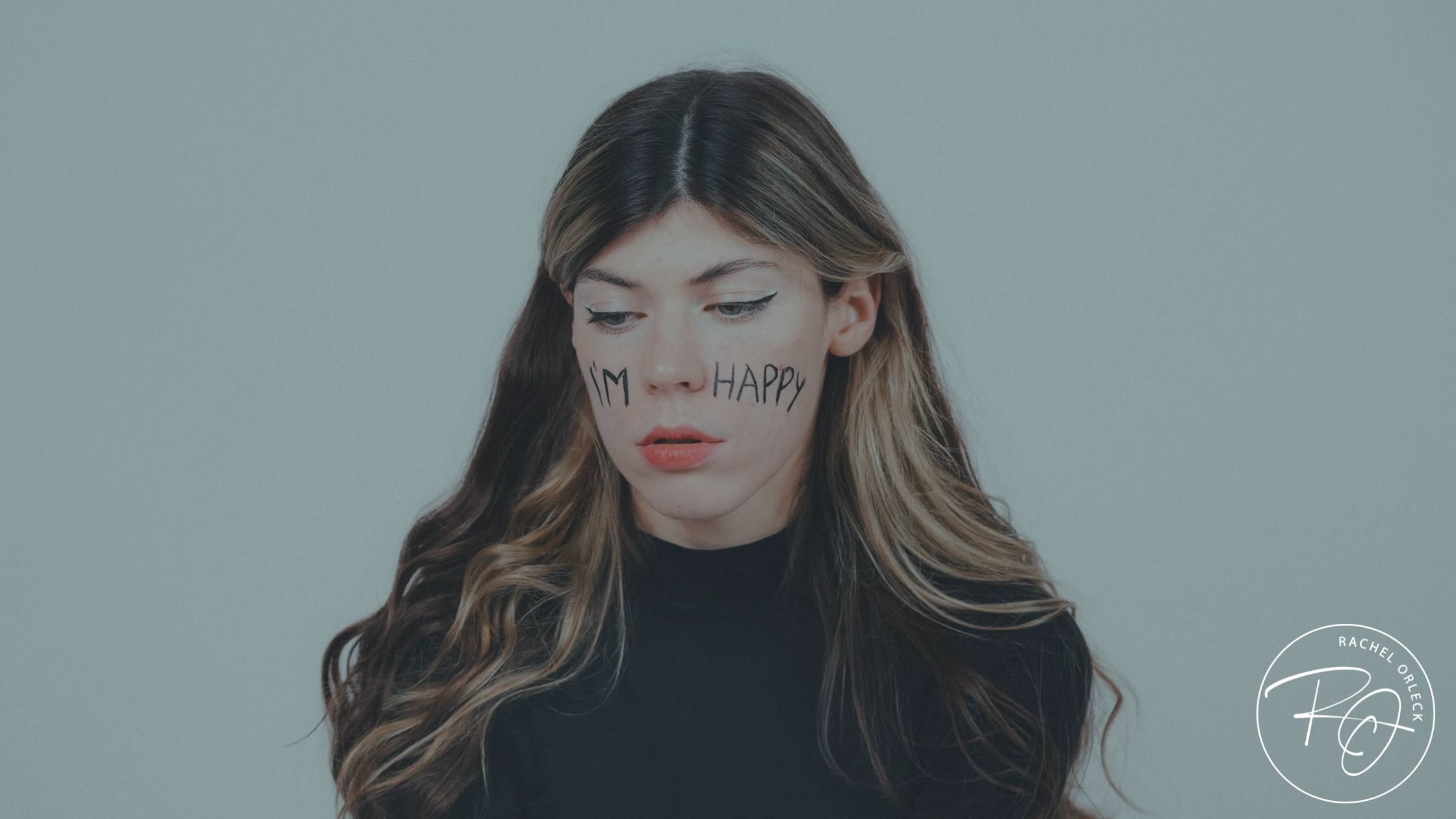
Why Saying "I'm Fine" Makes Things Worse: How False Calm Erodes Connection
Why Saying "I'm Fine" Makes Things Worse: How False Calm Erodes Connection
Saying "I'm fine" when you're not feels like the kind thing, the low-maintenance thing, the thing that keeps the room from getting heavier than it already is. It is none of those things.
Listen or Read Below.
If this episode spoke to you, would you leave a ⭐️⭐️⭐️⭐️⭐️ rating and review on Apple Podcasts? Your support helps more couples find the show.

Prefer Spotify? You’ll find the show there too and other favorite platforms.
You Know the Script
Something feels off. Your partner asks if you're okay. And out comes the automatic response — I'm fine. Maybe with the forced smile. Maybe with the quick subject change, like you can will the tension away if you just act convincingly enough.
On the surface, it looks like peacekeeping. Inside, it feels like holding your breath and hoping they don't push any harder.
Here's the myth worth busting: I'm fine protects your relationship. It doesn't. Your partner senses the disconnection anyway. They see it in your body, hear it in your tone, feel it in the distance in your touch — and your words deny it. That double message doesn't create reassurance. It creates uncertainty. And uncertainty, repeated often enough, erodes trust faster than conflict ever could.
I'm fine doesn't buy you time. It buys you distance.
What It's Actually Doing to Your Partner
Think of it like duct tape over a fire alarm. The alarm might go quiet for a moment. But the smoke is still filling the room. Your nervous system feels like it dodged a bullet. Your relationship feels the smoke.
What happens on the other side of I'm fine is this: your partner is left trying to decode mixed signals. They can see the tension. They know something is wrong. But your words tell them to ignore what they're sensing — and that puts them in an impossible position. Do I believe what they say or what I feel?
Over time, they stop asking. Not because they stopped caring, but because the answers stopped being reliable. They feel dismissed for noticing the tension. What once felt like a protective gesture starts to feel like emotional whiplash. And eventually, they stop trusting the alarm at all — which means that when things actually are fine, there's no way for them to know it.
This is where relationships start to feel like walking on eggshells. Not because of conflict. Because of the chronic gap between what's being said and what's actually in the room.
I have seen this go all the way. A couple where I'm fine had become such a hot button — had eroded trust so completely — that they couldn't have a conversation even when things were genuinely okay. The phrase had stopped meaning anything at all. What was meant to keep the peace had quietly taken it apart.
Why the Nervous System Reaches for It
Saying I'm fine isn't lying. It's not proof that you don't care about your partner or that you're emotionally shallow. It is a nervous system strategy — and understanding it as one changes what you do with it.
When the body senses threat — conflict, rejection, overwhelm — it goes into survival mode. In relationships, that often looks quieter than fight or flight. It looks like fawn or freeze. I'm fine is the shorthand of a system that doesn't feel safe enough to be real.
Sometimes it's fear. Fear that naming the truth will open a conflict you're not ready for. Fear of being labeled as too much. Fear that your honest reaction won't land well and you'll end up more alone than if you'd said nothing. And sometimes it isn't even fear — it's timing. You genuinely don't have the words yet. You know something isn't right, but you can't explain it. So the body reaches for the placeholder.
The intent makes complete sense. It's trying to protect the connection. But the impact is disconnection. Silence and denial don't reassure your partner. They leave them spinning. And the strategy that was meant to prevent hurt ends up multiplying it.
Here's a quick self-check worth keeping: FINE usually stands for Freaked out, Insecure, Numbed out, and Exhausted. That's what I'm fine typically masks. If you're in one of those states when the words come out, your body is coping — not connecting. Naming that to yourself first is how you catch the reflex before it runs the moment.
What the Erosion Actually Looks Like
This is the part that's uncomfortable to sit with, because it requires looking at the pattern across time rather than in any single moment.
Every time you say I'm fine when you're not, and your partner senses the truth anyway, you are training them — without meaning to — not to trust your words. At first they might check in again. Eventually they stop asking. And without either of you realizing it, you've created a dynamic where your partner feels unsafe trusting your answers, and you feel unseen even though you've been the one withholding.
Meanwhile, on your end, when you do eventually bring up the thing you've been holding, it's bigger than it needed to be. Not just because of time — because now there's a second layer. Not only are you talking about the original hurt, you're also navigating your partner's hurt at being told nothing was wrong when something clearly was. The conversation that could have been manageable has become a negotiation through two layers of pain.
The silence that felt like it was keeping peace was actually taking it apart — quietly, consistently, in ways that are hard to trace until the distance is already there.
The Myth Underneath the Myth
The deepest myth here isn't that I'm fine protects the relationship. It's that honesty is the riskier move.
It isn't. Honest imperfection feels riskier in the moment — but it lays the foundation for real intimacy. The strongest predictor of long-term relationship satisfaction isn't conflict-free harmony. It's the trust that both partners can speak the truth and stay engaged. In emotional connection, the magic isn't in perfect words. It's in honest ones.
When your words and your energy line up — when you say something true even if it's rough — your partner doesn't have to decode mixed signals. They can trust you. And that trust is what makes a relationship resilient, even through conflict. Especially through conflict.
The goal is not to pour every raw thought out the moment it appears. The goal is to replace denial with small honesty. Even something as imperfect as I'm not okay but I don't have the words yet or something's wrong, I just need a little time before I can talk about it — those sentences do two things at once. They acknowledge that something is real. And they signal that you're not shutting your partner out permanently. You're just not ready yet.
That combination — honesty plus reassurance — is what builds the trust I'm fine was never actually offering.
The Hardest Part Isn't the Words
What clients tell me, after they've started practicing this, is that the hardest part isn't finding the right phrase. It's tolerating the pause afterwards. Silence feels risky. So I'm fine rushes in to fill it.
But if you can take a breath, check in with yourself — am I actually fine, or am I freaked out, insecure, numbed out, or exhausted — and reach for a bridging phrase instead, something shifts. Not because the conversation suddenly becomes easy. Because you've created a moment of choice. And in that choice, your partner feels something different than they feel when the door closes. They feel the difference between a denial and an attempt at honesty. That difference, over time, is where trust gets rebuilt.
You are not failing at communication. You are human, and your nervous system is doing exactly what it was wired to do. The reflex makes sense. But what protects you in the moment builds distance over time — and at some point, the cost of the distance becomes higher than the risk of the honesty.
Small honesties beat denial every time. And with practice, your nervous system learns something it may never have been taught: that honesty is not just survivable. It's where the closeness you've been protecting against losing actually lives.
Dr. Rachel Orleck is a relationship coach, psychologist and certified EFT (Emotionally Focused Therapy) couples therapist specializing in attachment patterns and relational repair. She helps people interrupt the negative cycles keeping them stuck—whether they're the person who withdraws or the person who pursues—and move toward becoming Responsive and Reachable in their relationships. Her work is rooted in understanding what's actually driving the behaviors, not just changing the behaviors themselves.
